Website sustainability – case studies
How four organisations across the UK are lowering their digital carbon footprints
19 March 2026
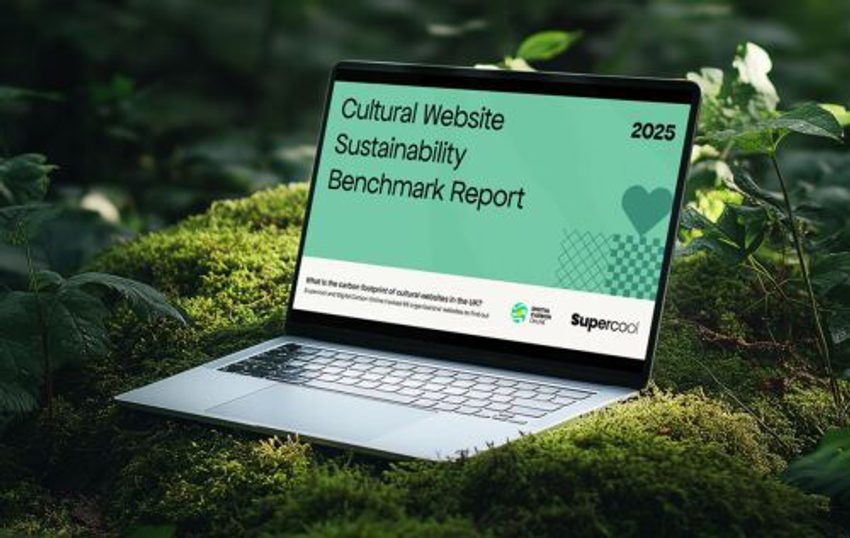
As part of Supercool's ongoing commitment to sharing knowledge about digital sustainability, in 2025 we collaborated with Digital Carbon Online to create the Cultural Website Sustainability Benchmark Report.
Over a three-month period, we measured the carbon footprints of 66 cultural websites – collecting data from nearly 9 million page views. Whew!
We then collated and analysed all that data, identified ways for organisations to measure their own websites, and shared some practical actions – to help you reduce your website's carbon footprint.
(There's a link to a handy overview, as well as the full report as a PDF, at the end of this article.)
Huge thanks to everyone who took part in our initial survey – and an extra-special shout-out to the British Museum, National Museums Scotland, Contact Theatre, and Orchestras Live for sharing their stories:

The British Museum
Over the past couple of years, we have been looking at improving our website’s carbon footprint.
This is not just the right thing to do for the planet; the changes we made have improved site speed and therefore the experience for our users, many of whom are foreign tourists, accessing the site via Wi-Fi. But at the same time as users need faster site speed, they also want to see more images of our collection and videos about our work. So, the challenge for us was, how could we do that without affecting site speed?
The answer was to look for ways to get our site to load as fast as possible, no matter what the content is. To achieve this, we did two key things: loading images in WebP - something which can be done at low cost, and with little effort, via Cloudflare - and working with our developers to improve our Core Web Vitals.
This work has made a significant difference. We now offer more rich content to users, without affecting site speed, and whilst also keeping our carbon footprint as low as possible.
Alison Bean – Website Product Manager, The British Museum

National Museums Scotland
National Museums Scotland is committed to addressing climate and biodiversity challenges, taking action across our whole organisation. So when it came to redeveloping our website, one of our priorities was carbon management.
To help us maintain a lower website carbon footprint, we’ve created new content design guidelines which include factors for managing the carbon footprint of assets and content.
These include:
- Defining maximum file sizes for images
- Limiting video embeds per page
- Questioning the number of images necessary for collections stories to make sure everything we include has a unique purpose.
We’ve also streamlined some of the more complex sections of our website – particularly Collections, Schools, and About us – by taking out unnecessary levels in the structure.
Focusing on our most visited areas of the website, we completely reworked the Visit pages, to make user journeys shorter, more efficient and therefore reducing the number of pages per user visit.
Lastly, we’ve deleted well over 400 pages and merged the content of over 140 others. This covers both the elimination of broken content and incorrect, out-of-date, or unnecessary information, as well as the retiring, archiving, or reworking of collections story content.
Kate Amann – Digital Product Manager, National Museums Scotland

Contact Theatre
Over the last year, Contact has taken a few practical steps to improve the digital sustainability of our website, aligning it with our wider commitment to environmental responsibility.
As part of this journey, we’ve focused on reducing the volume of image and video content used across our site. Ideally limiting each page to a single image wherever possible. This not only lowers the energy required to load our site but also encourages more intentional, efficient photography and content design. We’ve also developed a regular process for deleting outdated pages and media files, especially those with larger file sizes, which helps to reduce our overall server load and carbon footprint.
Additionally, we regularly ask Supercool to carry out periodic audits of our website and suggest ways that we can be more digitally sustainable. This has been instrumental in helping us stay accountable and identify areas where we can do better.
For other organisations, simple actions like limiting media, deleting outdated content, and scheduling regular audits can make a meaningful impact without requiring a lot of time or money. And it always helps to ask people outside your team to input too, because it can often be hard to identify necessary changes when you work with the website every day.
Rebecca Coughlan – Communications & Marketing Manager, Contact Theatre

Orchestras Live
We started our digital sustainability journey in 2022, with a peer learning project working alongside Supercool, the Arts Marketing Association and the WOW Foundation.
As part of this, we undertook a content audit of our website to try and understand what its carbon footprint was, and which areas were contributing to it the most. Whilst our website footprint was relatively light, we were able to implement some changes as a result of the audit, including using a less energy-intensive background colour, removing unnecessary ‘heavy’ content like videos and images, and removing irrelevant content like old news pages.
When we ran the content audit 18 months later, we were really pleased to find that our website carbon footprint had reduced by just over half, showing that the changes we implemented had made a difference.
In order to keep our use of our website sustainable, we introduced some ‘green website guidelines’ as a result of learning from the audit process that inform our day-to-day use of the website. These included: limiting heavy content on pages (i.e. one video per page and only using video content where relevant), using lighter image files where possible, and removing old content on a regular basis.
We also made a digital sustainability pledge to publicly commit to these actions, which include balancing our approach to digital sustainability with accessibility when generating new content, and reviewing pledges on a regular basis.
Karys Staddon – Production, Data & Insight Analyst, Orchestras Live
Next steps
Here’s a helpful written overview of the main things we learnt from the Report, along with some practical ideas about what we can all do to improve: Cultural Benchmark Website Sustainability Benchmark Report 2025
Or if you're ready for a deep-dive …
Download the Report:
The full Report includes:
- Analysis of our findings, and insights into the cultural sector
- Ways to measure your organisation’s website carbon footprint
- … then benchmark it against other UK cultural organisations
- Practical actions you can take to reduce your website’s carbon footprint
Supercool’s Cultural Website Sustainability Benchmark Report 2025 is freely available to everyone. We want as many people as possible to benefit from these findings, and to better understand how to reduce the negative environmental impact of their website.
For more resources about digital sustainability, visit the Supercool Sustainability Resource Hub